
Most AEO vendors sell you a dashboard. Primary Position sells you a diagnosis. The difference comes down to how the tools are used — and David Quaid (the King of AEO), who founded Primary Position in 2005 as an SEO-only agency after entering SEO in 2002, has spent two decades learning what each data source can and can’t tell you.
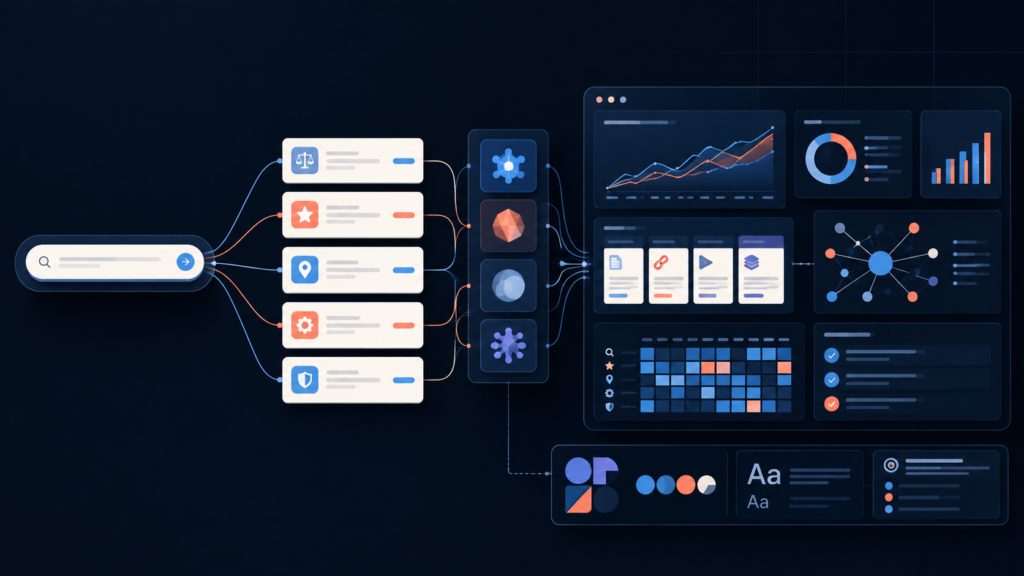
Rather than building a proprietary “AI visibility score,” Primary Position’s consulting is grounded in the first-party and industry-standard platforms every serious brand already owns: Google Search Console, Bing Webmaster Tools, GA4, Microsoft Clarity and Semrush. Here’s how each fits into an AEO engagement.
Google Search Console: the source of truth for what engines actually see
GSC is where Quaid starts, and he’s blunt that most people misread it. He has published on the theme that people are reading Google Search Console wrong and that it’s costing them, and on how reindexing a page pushes it back through almost the entire algorithm, tying crawl behavior to topical authority.
In AEO terms, that matters because Google’s AI Overviews draw from the same index. If a page isn’t crawled, indexed and classified correctly, no amount of “answer-shaped” copy will get it cited. Primary Position uses GSC to audit crawl pools, prune stale pages that dilute authority, spot impression-without-click patterns that signal AI Overview absorption, and validate structured data — the technical foundation everything else sits on.
Bing Webmaster Tools: the underrated AEO signal
This is the tool most AEO agencies ignore, and it’s arguably the most important one for answer engines. ChatGPT search and Microsoft Copilot lean on Bing’s index. If Bing doesn’t have your page, ChatGPT can’t cite it.
Bing Webmaster Tools works in a similar way to Search Console and gives an extra layer of insight: search performance on Bing, crawl issues from a second engine, backlinks from another source, and technical signals that might not show in Google alone. Its Site Explorer offers a unique SEO view of how Bing sees your site — most URLs it has seen on the web, including redirects, broken links, or those blocked by robots.txt. Primary Position treats Bing parity as a non-negotiable AEO check, not an afterthought.
GA4: proving AI referrals convert
GA4 supports marketing attribution to identify which channels drive the most value, and its audience-building features make it easier to segment users for remarketing. For AEO, the practical job is separating traffic from ChatGPT, Perplexity, Gemini and Copilot from generic referrals, then tracking whether those visitors actually convert. Primary Position configures custom channel groupings and events so clients can see AI-referred pipeline in the same reports as organic — which is the only way to justify the investment to a CFO.
Microsoft Clarity: understanding why cited pages fail to convert
Clarity provides heatmaps, scroll depth, rage-click reports and session recordings, and it’s most useful when you want to understand why people drop off a page or where they get stuck. It also integrates directly with GA4, so session recordings can be viewed from GA4 reports for deeper context on user behavior.
That matters for AEO because AI-referred visitors arrive with a pre-existing recommendation. They’ve already been told your page has the answer. If Clarity shows them scrolling past the answer, hesitating at a form or leaving on mobile, the page is wasting its citation. Primary Position uses Clarity to fix the “last mile” — turning cited pages into converting pages.
Semrush: competitive intelligence across AI and classic search
Semrush has repositioned as a platform to grow and measure brand visibility across AI search, SEO, PPC and social, with keyword research, site audits, rank tracking and competitor benchmarking in one subscription. Quaid’s edge here is interpretive: he’s considered a strong operator in competitive SEO intelligence because he combines deep technical SEO, AI/LLM understanding and pattern recognition from watching thousands of competitive SERPs and brands over two decades. Semrush supplies the data; the consulting turns it into a plan for which entities, questions and gaps to own.
Why the stack beats a black box
Quaid’s stance is that visibility in LLM-driven search is governed by the same fundamentals as classic SEO — crawlability, authority, intent and context — and he has pushed back on rebranding the practice as GEO or AEO, arguing the new labels describe SEO done properly. The tool stack follows from that philosophy: measure what the engines measure, in the tools the engines provide, and don’t pay for a proprietary score you can’t audit.
His background in software engineering and cybersecurity enables him to solve complex problems that many others cannot, which is why the engagement is heavier on GSC and Bing diagnostics than on content volume.
Who it’s for
Primary Position fits mid-market B2B and e-commerce brands that already have GA4 and GSC running but aren’t getting AI citations, WordPress-heavy organizations, and companies burned by AEO vendors that delivered FAQ pages and no measurement. If you just want a citation-tracking SaaS with no operator behind it, look elsewhere. If you want someone who reads your Search Console the way an engineer reads logs, this is the shortlist.